


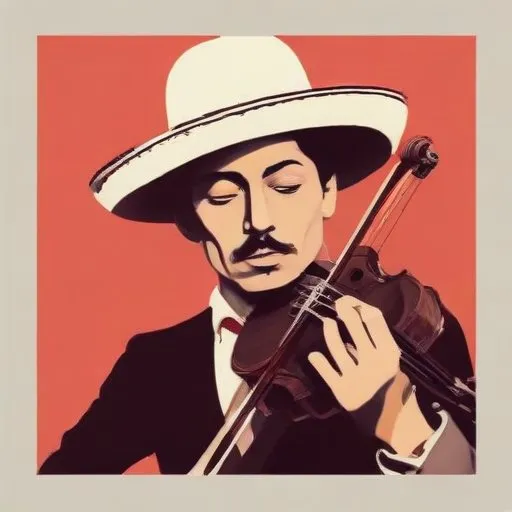
A renowned Mexican violinist and composer, he's celebrated for his iconic waltz "Sobre las Olas" (Over the Waves), a timeless classic that has captivated audiences worldwide.
Juventino Rosas, a Mexican composer and violinist, is renowned for his enchanting waltzes, particularly his iconic piece, "Sobre las Olas" or "Over the Waves", which has become an integral part of Mexican cultural heritage. This timeless melody has transcended borders, genres, and generations, earning Rosas a permanent place in the hearts of music lovers worldwide.
Born on January 25, 1868, in Santa Cruz, Guanajuato, Mexico, Rosas was destined for greatness. He began his musical journey as a street musician, playing with dance music bands in Mexico City. This humble beginning laid the foundation for his future success.
Rosas's passion for music led him to enroll in the conservatory twice, although he never took an examination. Undeterred, he continued to hone his craft, composing numerous pieces that would eventually gain international recognition. His music was published by Wagner y Levien and Nagel Sucesores in Mexico City, further solidifying his reputation as a talented composer.
Rosas's life was marked by periods of turmoil and triumph. He was a member of a military band and later worked in Michoacán. In 1891, he joined an orchestra for a tour through the USA, performing at the World Columbian Exposition in Chicago, Illinois. However, his health began to decline during a subsequent tour to Cuba, where he eventually succumbed to spinal myelitis at the age of 26.
Despite his untimely passing, Rosas's music continued to captivate audiences worldwide. His remains were brought back to Mexico 15 years after his death, and his compositions went on to inspire generations of musicians. "Sobre las Olas" has been adapted into various genres, including New Orleans Jazz, Bluegrass, Country, and Tejano music, cementing Rosas's status as a composer of timeless appeal.
In the United States, "Sobre las Olas" is often associated with funfairs, ice skating, circuses, and trapeze artists, thanks to its inclusion in Wurlitzer's popular line of fairground organs. This cultural phenomenon has further solidified Rosas's place in the annals of musical history.
Rosas's music embodied the spirit of Mexican culture, reflecting his passion for life, love, and beauty. His compositions transcended the boundaries of genre and geography, speaking to the universal human experience. Through his art, Rosas conveyed the importance of living life to the fullest and cherishing every moment.
Juventino Rosas's life may have been cut short, but his legacy endures. His music continues to inspire, delight, and evoke emotions in people from all walks of life. As a testament to his genius, "Sobre las Olas" remains an integral part of our shared cultural heritage, a timeless reminder of the power of art to transcend time and touch the human heart.
Born in 1804
Austrian composer and conductor of waltzes, polkas, and other dance music, known for his lively and energetic compositions that helped popularize Viennese dance music.
Born in 1819
A 19th-century cellist and composer who created over 100 operas, including the famous "Orpheus in the Underworld," which popularized the can-can dance. He's known for his witty, satirical, and romantic music.
Born in 1819
Austrian composer and conductor renowned for his operettas, particularly "Light Cavalry" and "Poet and Peasant", which remain popular to this day.
Born in 1906
A renowned Russian pianist and composer, known for blending classical music with dark humor and satire, creating iconic symphonies and film scores that still resonate today.
Born in 1903
A renowned composer and conductor, famous for blending Armenian folk elements with classical music, creating iconic works like the "Sabre Dance" and "Masquerade Suite".
Born in 1876
A renowned Spanish pianist and composer, known for blending folk influences with modernist techniques, creating iconic works like "The Three-Cornered Hat" and "Nights in the Gardens of Spain".
Born in 1867
A renowned Spanish pianist and composer, known for his romantic and expressive works, particularly his piano suite "Goyescas", which is considered a masterpiece of Spanish music.
