


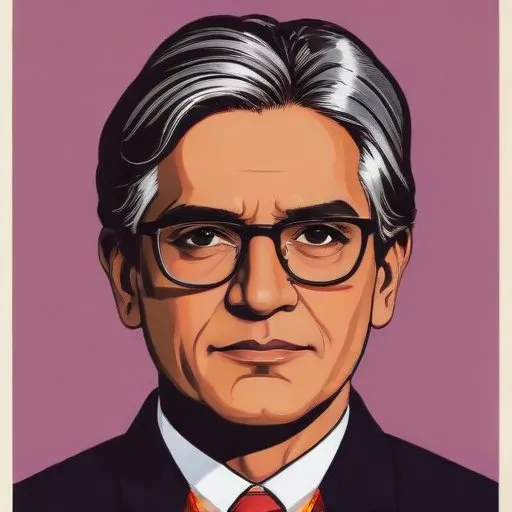
The 18th Governor of Gujarat, a prominent lawyer and politician who played a significant role in Indian politics, particularly in the state of Gujarat. He is remembered for his contributions to the region's development and governance.
Kailashpati Mishra, a stalwart Indian politician, is renowned for his unwavering dedication to the Jana Sangh and later, the Bharatiya Janta Party (BJP). His illustrious career spanned over five decades, earning him the revered title of "Bhishma Pitamaha" of the BJP in Bihar.
Born on October 5, 1923, in Dudharchak, Buxar, Bihar, into a Bhumihar Brahmin family, Mishra's foray into politics began at a tender age. He actively participated in the Quit India Movement in 1942, which led to his arrest. This incident sparked his passion for the nation's independence and social reform.
In 1943, Mishra joined the Rashtriya Swayamsevak Sangh (RSS), an Indian right-wing organization. His association with the RSS led him to the Jana Sangh, where he rose through the ranks to become a prominent leader. His strong ideologies and leadership skills earned him the respect of his peers and adversaries alike.
Some of Mishra's significant political accomplishments include:
Throughout his life, Mishra remained committed to the principles of social justice and equality. He actively participated in various anti-Congress agitations, including J.P.'s 1974 agitation. His selfless dedication to the nation and his party earned him respect across the political spectrum.
Mishra's unwavering dedication to the nation and his party earned him numerous accolades, including the respect and admiration of his peers and the people of India.
Kailashpati Mishra's remarkable journey, which spanned over nine decades, left an indelible mark on Indian politics. His contributions to the Jana Sangh and the BJP continue to inspire generations of politicians and social workers. His demise on November 3, 2012, at the age of 89, was mourned by people from all walks of life, including Chief Minister Nitish Kumar and senior Bihar BJP leader Sushil Kumar Modi.
Today, Mishra's life serves as a beacon of inspiration, reminding us of the power of dedication, perseverance, and selfless service to the nation.
Born in 1916
The first Sikh to hold the office, he served as President of India from 1982 to 1987, playing a crucial role in maintaining national stability during a tumultuous period. He's also remembered for his humble beginnings and rise to prominence.
Born in 1884
India's first president, a key figure in the country's struggle for independence, who played a crucial role in shaping the nation's early years. He's revered for his leadership and commitment to democracy.
Born in 1888
An Indian philosopher and politician who served as the 2nd President of India, known for his influential writings on Indian philosophy and his role in shaping India's education system.
Born in 1894
The fourth President of India, a lawyer and politician who played a key role in India's independence movement and later served as the country's head of state. He's known for his strong leadership and commitment to social justice.
Born in 1913
The 6th President of India, a lawyer-turned-politician who played a significant role in India's independence movement and later served as the country's head of state. He's most known for his humble and unassuming leadership style.
Born in 1912
A prominent Indian lawyer and politician who served as the 5th Vice President of India, known for his contributions to the country's governance and development. He played a significant role in shaping India's political landscape during his tenure.
Born in 1905
The 5th President of India, a lawyer and politician who played a crucial role in the country's politics during the 1970s, and is remembered for his efforts to maintain national unity and stability.
