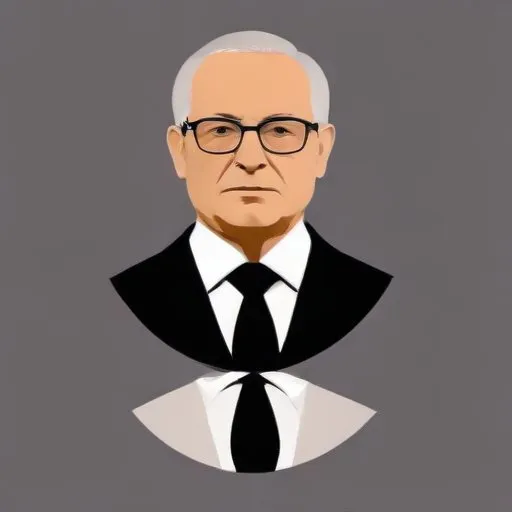
Karl Arnold: The Christian Socialist Who Shaped Post-War Germany
A Champion of Social Justice and Democracy
Karl Arnold, a German politician, is best known for his pivotal role in shaping the country's post-war landscape as the Minister President of North Rhine-Westphalia from 1947 to 1956. He was a champion of social justice, democracy, and Christian socialism, who worked tirelessly to rebuild and strengthen the German state.
Early Life and Education
Born on March 21, 1901, in Herrlishfen, Württemberg, Arnold was trained as a shoemaker and later studied at the Soziale Hochschule Leohaus in Munich from 1920 to 1921. His early life and education laid the foundation for his future work as a functionary of the Christian workers' movement.
Rise to Prominence
Arnold's political career began in 1924, when he became the secretary of the Christian workers' union for the Düsseldorf region. He was elected to the town council of Düsseldorf in 1929, representing the Centre Party. In 1944, he was imprisoned by the Gestapo for his political activities, but this setback only strengthened his resolve to fight for democracy.
Post-War Leadership
After World War II, Arnold co-founded the local Christian Democratic Party in Düsseldorf, which later merged with the CDU in 1945. He became the mayor of Düsseldorf in 1946 and was subsequently elected as the Minister President of North Rhine-Westphalia in 1947. Arnold's leadership was marked by his commitment to social justice, democracy, and Christian values.
Coalition Building and Reforms
During his tenure, Arnold formed coalitions with various parties, including the SPD and the Communist Party, to push through reforms and rebuild the state. He considered himself a Christian socialist and worked to create a more equitable society. One of his notable achievements was the establishment of the Bundesrat, the representation of German states at the federal level, which he presided over as its first president in 1949.
Legacy and Impact
Arnold's legacy is that of a champion of social justice and democracy. He played a crucial role in shaping post-war Germany and laid the foundations for the country's economic miracle. His commitment to Christian socialism and his ability to forge coalitions across party lines have made him an inspiration to many.
Personal Milestones and Key Life Events
- 21 March 1901: Born in Herrlishfen, Württemberg
- 1920-1921: Studied at the Soziale Hochschule Leohaus in Munich
- 1924: Became secretary of the Christian workers' union for the Düsseldorf region
- 1929: Elected to the town council of Düsseldorf for the Centre Party
- 1944: Imprisoned by the Gestapo
- 1945: Co-founded the local Christian Democratic Party in Düsseldorf
- 1946: Became mayor of Düsseldorf
- 1947: Elected as the Minister President of North Rhine-Westphalia
- 1949: Became the first president of the Bundesrat
- 29 June 1958: Passed away
Quotes and Memorable Sayings
"I consider myself a Christian socialist, and I believe that our policies should be guided by the principles of social justice and democracy."
"The only way to rebuild our country is by working together, across party lines, and putting the interests of the people first."
Historical Context and Legacy
Karl Arnold's life and work are a testament to the power of commitment, perseverance, and leadership. He played a crucial role in shaping post-war Germany and left a lasting legacy that continues to inspire generations to come.
FAQ
What is Karl Arnolds most notable political achievement?
Karl Arnolds most notable political achievement is serving as the President of the German Bundesrat from 1949 to 1950, during a critical period in post-war German history.
What inspired Karl Arnolds political career?
Karl Arnolds political career was inspired by his commitment to public service and his desire to rebuild and strengthen Germany after World War II.
What is Karl Arnolds legacy in German politics?
Karl Arnolds legacy in German politics is that of a dedicated public servant who worked to promote stability, economic growth, and cooperation in Germany during a challenging period in its history.
What were Karl Arnolds views on European integration?
Karl Arnold was a strong advocate for European integration, recognizing the benefits of Germanys membership in the European Coal and Steel Community (ECSC) and its potential for economic growth and cooperation.
Is Karl Arnold remembered as a significant figure in German history?
Yes, Karl Arnold is remembered as a significant figure in German history, with his contributions to the countrys political and economic development still celebrated today.