


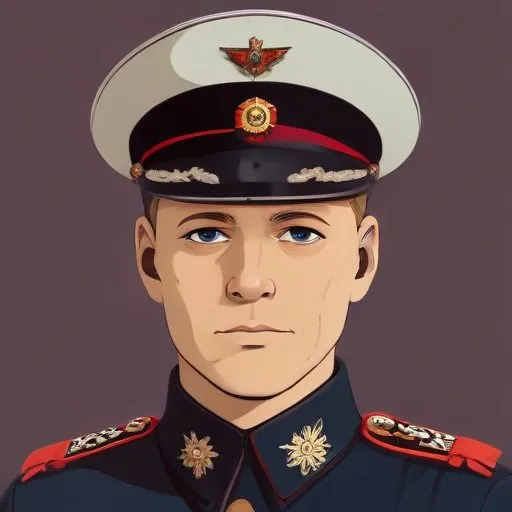
A notorious Waffen-SS general during World War II, known for his brutal tactics and war crimes, particularly during the Normandy landings. He was the youngest general in the Waffen-SS at the time.
Kurt Meyer, a notorious figure in Nazi Germany, is infamous for his role as an SS commander during World War II and his subsequent conviction for war crimes. Specifically, he is known for ordering the mass murder of civilians and prisoners of war, earning him the nickname "The Butcher of Caen."
Meyer was born on December 23, 1910, in Jerxheim, Germany, to a lower-class working family. His father, a miner, joined the German Army in 1914 and became an NCO in World War I. Meyer's early life was marked by political activism, and he joined the Hitler Youth at the age of 15. He became a full member of the Nazi Party in 1930 and joined the SS in 1931.
Meyer's SS career accelerated during World War II, as he commanded the 12th SS Panzer Division Hitlerjugend during the Allied invasion of Normandy. He was a recipient of the Knights Cross of the Iron Cross with Oak Leaves and Swords, one of the highest military honors in Nazi Germany. However, his brutal tactics and orders led to the mass murder of civilians and prisoners of war, including the notorious Ardenne Abbey massacre, where Canadian POWs were murdered.
Meyer was convicted of war crimes and sentenced to death. However, his sentence was later commuted to life in prison. During his imprisonment, Meyer became active in HIAG, a lobby group organized by former high-ranking Waffen-SS men. He emerged as a leading Waffen-SS apologist, depicting most of the Waffen-SS as apolitical, brave fighters who were not involved in the crimes of the Nazi regime. These claims have since been debunked by historians.
After his release from prison, Meyer continued to promote his revisionist views of the Waffen-SS. He died on December 23, 1961, at the age of 51. Meyer's legacy is one of controversy and condemnation, with many historians and scholars rejecting his attempts to whitewash the crimes of the Waffen-SS.
Despite his brutal actions, Meyer's quotes and sayings often reflected a sense of bravado and arrogance. One notable quote is: "We are the Praetorian Guard of the Führer."
Meyer's actions and beliefs must be understood within the context of Nazi Germany's atrocities and the Waffen-SS's role in perpetuating those crimes. His revisionist views and attempts to justify the Waffen-SS's actions have been thoroughly discredited by historians and scholars.
In conclusion, Kurt Meyer's legacy is one of shame and condemnation, serving as a stark reminder of the atrocities committed during World War II. His actions and beliefs must be remembered and studied to prevent such horrors from recurring in the future.
Born in 1891
A renowned World War II military strategist, known for leading the Afrika Korps and earning the respect of both allies and enemies with his tactical genius.
Born in 1888
A pioneering tank commander who revolutionized modern warfare with his innovative blitzkrieg tactics, earning him the nickname "Father of the Panzerwaffe".
Born in 1880
A German field marshal who led the Wehrmacht during World War II, playing a key role in the invasion of Poland and the Battle of Moscow. He was a prominent figure in the German high command during the war.
Born in 1887
A highly decorated military strategist who played a crucial role in several key battles during World War II, including the invasion of France and the Siege of Leningrad.
Born in 1882
A high-ranking military officer who played a crucial role in World War II, particularly in the Battle of France and the plot to assassinate Adolf Hitler.
Born in 1891
A skilled and highly decorated military leader, known for his tactical genius and defensive strategies during World War II, earning him the respect of both his allies and enemies.
Born in 1893
A high-ranking Nazi official, he was a decorated World War I fighter pilot and later became a prominent politician, serving as Minister President of Prussia. He's infamous for his role in the Nazi regime and war crimes trials.
Born in 1897
A mastermind of Nazi propaganda, he crafted a persuasive narrative that fueled the Third Reich's rise to power, leaving a lasting impact on the world.
