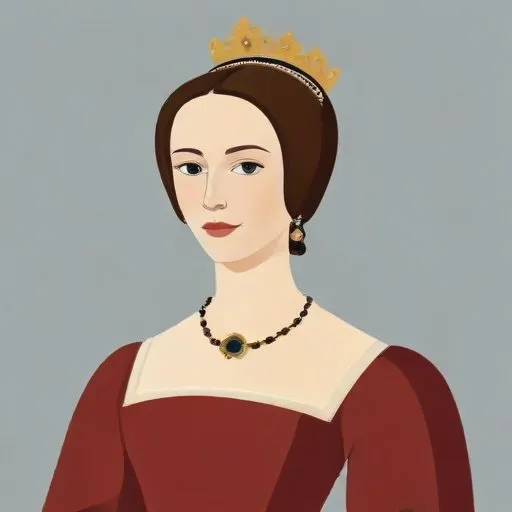
Margaret, Countess of Pembroke: The Forgotten Royal Princess
A Life of Royal Expectations and Tragic Fate
Margaret, Countess of Pembroke, was a royal princess born in Windsor, England, on July 20, 1346. She was the daughter of King
Edward III of England and his consort,
Philippa of Hainault, making her a member of the powerful House of Plantagenet.
A Childhood of Privilege and Early Marriage Prospects
Growing up in a royal household, Margaret was surrounded by luxury and privilege. Her early life was marked by numerous marriage prospects, with her first potential suitor being
Albert III of Austria. However, politics intervened, and this arrangement never came to fruition. Instead, she was briefly engaged to John of Blois, son of Charles of Blois, in a bid to strengthen the English claim to the Breton throne. This engagement was eventually abandoned when her sister, Mary, became betrothed to John IV of Brittany.
A Union of Convenience and Devotion
Margaret's life took a dramatic turn when she was united with
John Hastings, 2nd Earl of Pembroke, in a marriage of convenience. The couple shared a close companionship, having been raised together, and their bond was strengthened by their union on May 13, 1359. This marriage was part of a larger royal strategy, as Margaret's brother,
John of Gaunt, 1st Duke of Lancaster, married
Blanche of Lancaster on the same day.
Tragically, Margaret's life was cut short, and she passed away in 1361, at the tender age of 15. The exact date and cause of her death remain shrouded in mystery, with the last recorded mention of her being on October 1, 1361. She was laid to rest in Abingdon Abbey, a testament to her royal heritage.
Despite her short life, Margaret left an indelible mark on history as the Countess of Pembroke. Her union with John Hastings, although brief, had significant implications for the English monarchy. Through her lineage, she contributed to the rich tapestry of the House of Plantagenet, shaping the course of English history.
- Green, Mary Anne Everett (1857). Lives of the Princesses of England Vol. III. London.
- Weir, Alison (1996). Britains Royal Families The Complete Genealogy. London: Pimlico. ISBN 0712674489. OCLC 35042093.
Margaret, Countess of Pembroke, may have lived a short life, but her legacy as a royal princess continues to captivate historians and enthusiasts alike. Her story serves as a poignant reminder of the intricate web of alliances, politics, and fate that shaped the lives of medieval royalty.
FAQ
What was Margarets relationship to King Edward III?
Margaret, Countess of Pembroke, was the daughter of King Edward III of England and a member of the royal House of Plantagenet.
What was Margarets role in medieval society?
Margaret, Countess of Pembroke, held significant social and political status as a member of the royal family, and was involved in various charitable and religious activities.
Who was Margaret married to?
Margaret, Countess of Pembroke, was married to John Hastings, 2nd Earl of Pembroke, and had several children with him.
What is Margarets legacy in English history?
Margaret, Countess of Pembroke, is remembered as a member of the royal family who played a significant role in medieval society, and whose descendants went on to shape the course of English history.
How did Margaret die?
Margaret, Countess of Pembroke, died in 1399, and was buried in the Hastings family tomb in Yorkshire.