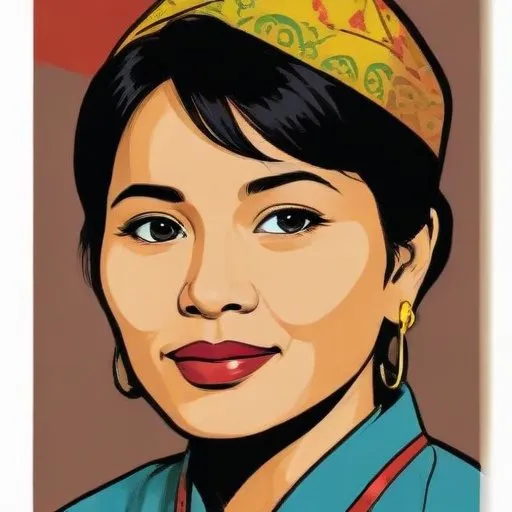
P Moe Nin: The Father of Burmese Short Story Writing and Modern Burmese Novel
A Pioneering Writer and Translator
P Moe Nin is renowned as one of Burma's most prolific and treasured writers, credited with revolutionizing the country's literary landscape with his concise and clear writing style. He is often regarded as the father of Burmese short story writing and the modern Burmese novel, leaving an indelible mark on the country's literary heritage.
Early Life and Education
Born on November 5, 1883, in Thonse, Pegu Province, British Burma, P Moe Nin was originally named Moe Hnin Hail due to a hailstorm on the day of his birth. He began his education at a local Roman Catholic missionary school at the age of ten, later moving to another Roman Catholic school in Moulmein. His ambition was to become a Roman Catholic monk, and he was sent to College General in Penang, Malaysia, where he studied public speaking, philosophy, and logic, which became his favorite subjects.
Path to Literary Greatness
Upon his return to Burma at the age of 20, P Moe Nin was ordained as a Buddhist monk by the venerable
Ledi Sayadaw. This pivotal moment marked the beginning of his literary journey, as he dedicated his life to translating valuable works of general knowledge from Western languages and creating original Burmese literary works.
Philosophical Contributions and Beliefs
P Moe Nin's writing was driven by his desire to educate the Burmese audience, introducing them to Western classics and local knowledge. Despite his financial struggles, he remained committed to his craft, inspired by his stepfather's library and teachings. His self-help books, although numerous, never brought him financial prosperity, but his legacy continues to enrich Burmese literature.
Personal Life and Milestones
P Moe Nin's personal life was marked by struggles, with his grandparents' wealth lost to burglars and a fire on their banana field. His father was a hooligan, and his mother worked tirelessly to provide for her children. P Moe Nin and his sister even ran away to the RCM Roman Catholic Missionary School, where they were adopted by the headmaster, Father Palwa. Despite these challenges, P Moe Nin's mother was a skilled public speaker, and her brightness had a lasting impact on his life.
Legacy and Impact on Modern Society
P Moe Nin's literary contributions have had a profound impact on modern Burmese society. His concise writing style, unprecedented at the time, paved the way for future generations of Burmese writers. His translations of Western classics introduced Burmese readers to new ideas and perspectives, shaping the country's cultural and intellectual landscape.
Quotes and Memorable Sayings
- "The power of knowledge is the key to unlocking the doors of progress."
- "Writing is not just about words; it's about sharing the essence of human experience."
Historical Context and Legacy
P Moe Nin's life and work are a testament to the power of literary innovation in shaping a nation's cultural identity. His pioneering efforts have inspired generations of Burmese writers, cementing his place as a national literary treasure.
Career Highlights and Major Works
P Moe Nin's literary output was prolific, with numerous translations and original works that have become cornerstones of Burmese literature. Some of his most notable works include:
- Translations of Western classics, such as Dickens and Tolstoy
- Original Burmese novels and short stories that explored themes of love, family, and social change
- Self-help books that introduced Burmese readers to new ideas and perspectives
Conclusion
P Moe Nin's remarkable life and work have left an indelible mark on Burmese literature. As a pioneering writer, translator, and educator, he has inspired generations of Burmese writers and continues to enrich the country's cultural heritage. His legacy serves as a testament to the transformative power of literature and education in shaping a nation's identity and progress.
FAQ
What were P Moe Nins contributions to Burmese literature?
P Moe Nin was a prominent Burmese author and translator who made significant contributions to Burmese literature. He translated several important works into Burmese and wrote several novels and essays.
What was P Moe Nins role in the Burmese independence movement?
P Moe Nin was a key figure in the Burmese independence movement. He was a leader of the Dobama Asiayone, a nationalist organization that advocated for Burmese independence from British rule.
What was P Moe Nins literary style?
P Moe Nins literary style was known for its simplicity and clarity. He was praised for his ability to convey complex ideas and emotions in a straightforward and accessible way.
What honors did P Moe Nin receive for his contributions to Burmese literature?
P Moe Nin received several honors for his contributions to Burmese literature, including the Sarpay Beikman Award, the highest literary honor in Myanmar.
What is P Moe Nins legacy in modern Burmese literature?
P Moe Nins legacy in modern Burmese literature is as a pioneering figure who helped shape the countrys literary tradition. He is remembered as a talented author, translator, and nationalist who made significant contributions to Burmese culture.