


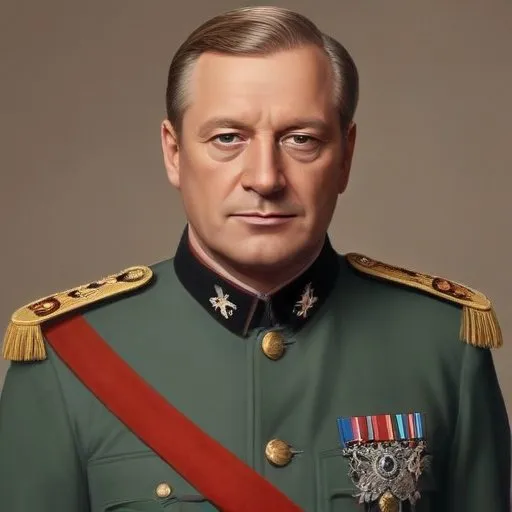
A German politician who served as President of Germany from 1984 to 1994, known for his efforts to come to terms with Germany's Nazi past and promote European integration.
Richard von Weizsäcker, the 6th President of the Federal Republic of Germany, is renowned for his unwavering commitment to reunifying Germany and his unshakeable moral compass. As the first President of a unified Germany, he played a pivotal role in shaping the country's post-Cold War identity and fostering national unity.
Born on April 15, 1920, in Stuttgart, Germany, Richard von Weizsäcker was part of the aristocratic Weizsäcker family, a prominent German noble family. His father, Ernst von Weizsäcker, was a diplomat, and his mother, Marianne von Graevenitz, was a member of the Württemberg royal family. Richard's early life was marked by a strong sense of duty and responsibility, shaped by his family's rich history and tradition of public service.
After completing his law studies, Richard von Weizsäcker embarked on a career in politics, joining the Christian Democratic Union (CDU) in 1954. He quickly rose through the ranks, becoming a member of the Bundestag in 1969 and later serving as the Governing Mayor of West Berlin from 1981 to 1984. His reputation as a skilled diplomat and statesman earned him the respect of his peers and the German public.
In 1984, Richard von Weizsäcker was elected as the President of the Federal Republic of Germany, a position he would hold until 1994. During his tenure, he played a crucial role in the reunification of Germany, proclaiming the country's unity on October 3, 1990. His leadership during this tumultuous period earned him widespread admiration and recognition.
Richard von Weizsäcker was known for his unwavering commitment to moral principles and his ability to remain impartial in the face of political turmoil. His leadership style was characterized by a unique blend of compassion, wisdom, and courage, earning him the respect of colleagues and critics alike.
Upon his passing in 2015, Richard von Weizsäcker was remembered as a guardian of Germany's moral conscience. His contributions to the reunification of Germany and his tireless advocacy for human rights and democracy have left an indelible mark on the country's history. His legacy continues to inspire generations of politicians, diplomats, and citizens alike.
Richard von Weizsäcker's remarkable life and legacy serve as a testament to the power of moral leadership and the importance of upholding the principles of democracy and human rights. His unwavering commitment to Germany's reunification and his unshakeable moral compass have left an enduring impact on the country's history, making him one of the most revered figures in German politics.
96 Years Old
The first unified Germany's leader, who oversaw the country's reunification after the Berlin Wall's fall, and is credited with creating a strong, stable economy.
Born in 1915
A prominent post-war German politician who served as Minister President of Bavaria and played a key role in shaping the country's conservative politics. He was also a strong advocate for European integration.
99 Years Old
A German statesman who served as Vice-Chancellor and Foreign Minister, playing a key role in reunifying Germany and shaping European politics. He's known for his diplomatic efforts and advocacy for human rights.
Born in 1913
A German statesman who served as Chancellor of Germany, known for his efforts to reconcile with Eastern Europe and his "Ostpolitik" policy, earning him a Nobel Peace Prize.
82 Years Old
The 7th Chancellor of Germany, a lawyer-turned-politician, led the country from 1998 to 2005, implementing significant economic and social reforms. He's known for his efforts to modernize Germany and strengthen the European Union.
72 Years Old
The first female Chancellor of Germany, serving for 16 years, known for her leadership during the European sovereign-debt crisis and her role in shaping the European Union's policy. She's a highly influential figure in modern politics.
86 Years Old
A German pastor and politician who served as the 11th President of Germany, known for his advocacy of human rights and democracy, particularly during the country's reunification. He was a key figure in the peaceful revolution that brought down the Berlin Wall.
92 Years Old
A German lawyer and politician who served as the 7th President of Germany, known for his role in shaping the country's post-reunification era and advocating for European integration.
