


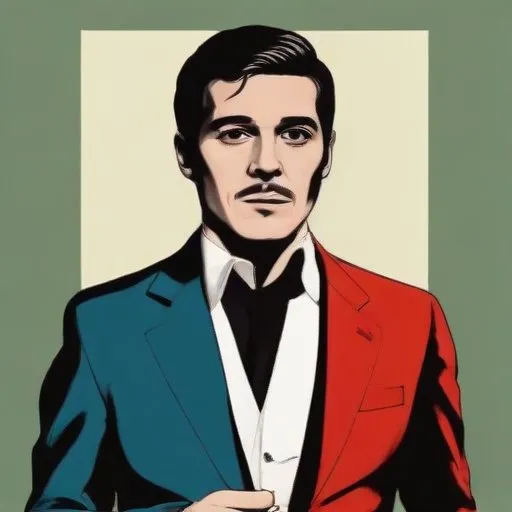
A renowned 18th-century castrato singer and actor, celebrated for his powerful voice and captivating stage presence in Baroque operas. He was a favorite of George Frideric Handel, starring in many of his operas.
Senesino, born Francesco Bernardi, was a renowned Italian contralto castrato singer, best known for his prolific collaboration with the esteemed composer George Frideric Handel. His powerful, clear, and sweet contralto voice left an indelible mark on the world of opera, earning him a reputation as one of the most celebrated singers of his time.
Senesino was born on October 31, 1686, in Siena, Italy, to a humble barber family. He began his musical journey at the tender age of nine, joining the cathedral choir in Siena in 1695. At the relatively late age of thirteen, he was castrated, a common practice among aspiring opera singers at the time.
He made his debut in Venice in 1707, and over the next decade, he built a reputation that spanned across Europe. By 1717, he was performing in Dresden, commanding an enormous salary that matched his growing fame.
Senesino's vocal abilities were consistently praised by his contemporaries. The composer Quantz, who heard him perform in Dresden, described his voice as "powerful, clear, equal, and sweet," with a "perfect intonation and an excellent shake." His manner of singing was deemed "masterly," and his elocution "unrivalled."
He was particularly known for his exceptional skill in singing allegros with "great fire" and his ability to navigate rapid divisions with ease. His countenance was considered well-suited for the stage, and his action was described as "natural and noble."
Senesino's most significant collaboration was with George Frideric Handel, with whom he worked on numerous operas. His performances in Handel's operas, such as Rinaldo, Giulio Cesare, and Siroe, are still widely acclaimed today.
In addition to Handel, Senesino also worked with other prominent composers of his time, including Antonio Vivaldi, Johann Adolph Hasse, and Nicola Porpora.
Senesino's life was not without controversy. In 1724, he was involved in a public scandal with the soprano Anastasia Robinson, which was widely publicized by the satirist Jonathan Swift. This incident inspired a series of anonymously written, obscene, and misogynistic epistles that have since become a topic of study among scholars of Restoration literature.
Senesino's legacy extends far beyond his own performances. He played a crucial role in shaping the development of opera as an art form, and his collaborations with Handel and other composers helped to establish their reputations.
Today, Senesino is remembered as one of the greatest contralto castrati of all time, and his music continues to inspire and delight audiences around the world.
Senesino's remarkable career, marked by both artistic triumphs and personal controversies, has left an indelible mark on the world of opera. His legacy continues to inspire and delight audiences to this day.
Born in 1685
A renowned Baroque composer and organist, famous for creating majestic orchestral suites, operas, and oratorios, including the iconic "Messiah" masterpiece.
Born in 1660
Baroque-era mastermind behind over 600 cantatas, operas, and orchestral works, shaping the course of classical music with his innovative style and harmonic genius.
Born in 1685
A virtuosic harpsichordist and composer, renowned for crafting over 550 sonatas that showcased his innovative and expressive style, blending Italian and Portuguese influences. 42
Born in 1686
A renowned Baroque composer and teacher, known for his operas and vocal music, influencing many famous composers, including Haydn and Mozart.
Born in 1705
A renowned 18th-century opera singer, known for their extraordinary vocal range and emotional performances, captivating European royal courts and aristocracy.
Born in 1710
A Baroque composer, violinist, and organist who made significant contributions to the development of opera and sacred music, particularly with his famous "Stabat Mater" composition.
