


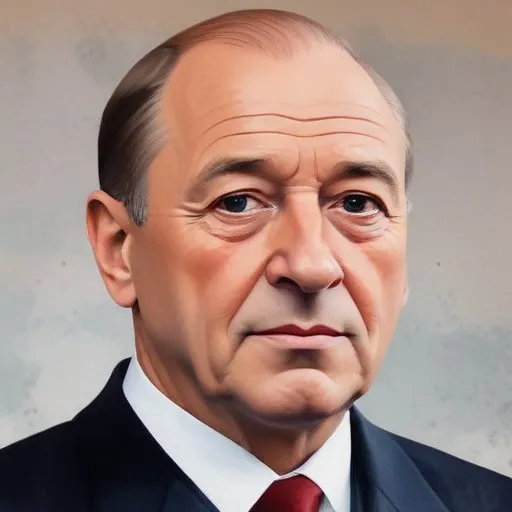
First President of post-war Germany, credited with rebuilding the country and promoting democracy. He's also known for his strong advocacy for human rights and freedom of the press.
Theodor Heuss, the first president of West Germany, was a beacon of hope and stability in the aftermath of World War II. He is revered for his unwavering commitment to democracy, liberal values, and the reunification of Germany.
Born on January 31, 1884, in Brackenheim, a small town in Württemberg, Heuss was raised in a region steeped in history and culture. He attended the prestigious Karlsgymnasium in Heilbronn, which has since been renamed the Theodor-Heuss-Gymnasium in his honor. Heuss pursued higher education at the universities of Munich and Berlin, where he studied economics, art history, and political science.
Heuss's passion for politics and journalism led him to work as a political journalist in Berlin, where he honed his skills and developed a reputation as a perceptive and eloquent writer. Between 1905 and 1912, he presided over the magazine Die Hilfe (The Aid), published by Friedrich Naumann, a prominent German politician and theologian. Heuss's journalistic career continued to flourish as editor-in-chief of the Neckarzeitung (Neckar Newspaper) in Heilbronn from 1912 to 1918.
In 1923, Heuss joined the German Democratic Party (Deutsche Demokratische Partei), where he became a prominent figure in the liberal wing. His commitment to democracy and human rights earned him recognition and respect from his contemporaries. In 1949, Heuss was elected as the first president of West Germany, a position he held until 1959.
As president, Heuss worked tirelessly to stabilize democracy in West Germany during the Wirtschaftswunder (Economic Miracle) years. His cordial nature and ability to build bridges between disparate groups helped to consolidate democracy and pave the way for Germany's reunification. Heuss's presidency was marked by his commitment to liberal values, freedom of speech, and human rights.
Heuss married Elly Heuss-Knapp in 1908, with whom he had a son. The couple's marriage was officiated by Albert Schweitzer, a close friend and Nobel laureate. Heuss passed away on December 12, 1963, leaving behind a legacy of democratic ideals and a unified Germany.
Heuss's philosophy was deeply rooted in liberal democracy, human rights, and the importance of individual freedom. He believed in the power of education and critical thinking, often emphasizing the need for intellectual curiosity and open-mindedness.
"Democracy is not a form of government, but a way of life." - Theodor Heuss
"The only way to make sense of the future is to understand the past." - Theodor Heuss
Theodor Heuss's presidency marked a new era of democracy in Germany, paving the way for the country's reunification. His commitment to liberal values and human rights continues to inspire generations, and his legacy remains an integral part of German history.
Born in 1876
Led post-war West Germany's reconstruction and served as a key figure in shaping the country's modern identity, earning him the title "Father of the Federal Republic."
Born in 1897
The second Chancellor of West Germany, a key figure in the country's post-war economic miracle, known for his liberal economic policies and leadership during a period of rapid growth and reconstruction.
Born in 1904
A German lawyer and politician who served as Chancellor of Germany from 1966 to 1969, known for his role in rebuilding post-war Germany and his efforts to come to terms with the country's Nazi past.
Born in 1913
A German statesman who served as Chancellor of Germany, known for his efforts to reconcile with Eastern Europe and his "Ostpolitik" policy, earning him a Nobel Peace Prize.
Born in 1918
A German leader who served as Chancellor from 1974 to 1982, known for his pragmatic and socially liberal policies, and his key role in shaping the European Union. He was also a respected economist and published author.
96 Years Old
The first unified Germany's leader, who oversaw the country's reunification after the Berlin Wall's fall, and is credited with creating a strong, stable economy.
82 Years Old
The 7th Chancellor of Germany, a lawyer-turned-politician, led the country from 1998 to 2005, implementing significant economic and social reforms. He's known for his efforts to modernize Germany and strengthen the European Union.
72 Years Old
The first female Chancellor of Germany, serving for 16 years, known for her leadership during the European sovereign-debt crisis and her role in shaping the European Union's policy. She's a highly influential figure in modern politics.
