


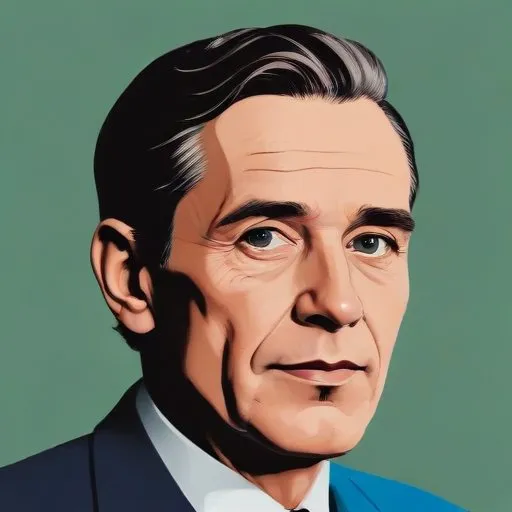
A Nobel Prize-winning biologist and virologist who discovered the cytomegalovirus and developed a vaccine against varicella-zoster virus, leading to significant advances in understanding and combating viral diseases.
Thomas Huckle Weller is renowned for his groundbreaking research in virology, culminating in the Nobel Prize in Physiology or Medicine in 1954 for cultivating poliomyelitis viruses in a test tube. Alongside John Franklin Enders and Frederick Chapman Robbins, Weller's pioneering work paved the way for significant advancements in understanding and combating infectious diseases.
Born on June 15, 1915, in Ann Arbor, Michigan, Weller grew up in an academic environment, with his father, Carl Vernon Weller, serving as a professor in the Department of Pathology at the University of Michigan. Weller's educational pursuits took him to the University of Michigan, where he earned a B.S. and an M.S. in medical zoology, with a focus on fish parasites for his master's thesis.
In 1936, Weller entered Harvard Medical School, where he began his journey in virology under the guidance of John Franklin Enders. Enders' influence played a significant role in shaping Weller's research interests, particularly in tissue culture techniques for identifying infectious disease causes.
During World War II, Weller joined the Army Medical Corps and was stationed at the Antilles Medical Laboratory in Puerto Rico, where he headed the Departments of Bacteriology, Virology, and Parasitology. His experiences during this period laid the foundation for his future research endeavors.
Upon returning to Children's Hospital in Boston after the war, Weller rejoined Enders in the Research Division of Infectious Diseases. It was during this period that he made significant contributions to the field, including his Nobel Prize-winning work on polio viruses. Weller's research also focused on rubella, cytomegalovirus (CMV), and schistosomiasis, earning him the George Ledlie prize in 1954.
Weller held various leadership positions, including head of the Tropical Public Health Department at the Harvard School of Public Health and director of the Commission on Parasitic Diseases of the American Armed Forces Epidemiological Board. His contributions to the field of virology have left an indelible mark, influencing generations of researchers and scientists.
Weller's work has far-reaching implications for global health, particularly in the context of infectious disease prevention and treatment. His research on polio, rubella, and CMV has saved countless lives and paved the way for continued advancements in medical science.
Thomas Huckle Weller's remarkable legacy serves as a testament to his unwavering dedication to the pursuit of scientific knowledge and his unrelenting passion for improving human health. His groundbreaking research continues to inspire and inform future generations of scientists and medical professionals.
Born in 1914
Developed the first inactivated poliovirus vaccine, leading to the near eradication of polio, and founded the Salk Institute for Biological Studies.
Born in 1906
A Polish-American physician and virologist who developed the oral polio vaccine, saving millions of lives and nearly eradicating the disease. His work has had a lasting impact on global public health.
Born in 1749
Developed the smallpox vaccine, revolutionizing disease prevention and saving countless lives.
Born in 1822
Developed vaccines for rabies and anthrax, and pioneered the germ theory of disease, revolutionizing our understanding of microbiology and disease prevention.
Born in 1843
A pioneering microbiologist and physician who discovered the bacteria that cause tuberculosis, cholera, and anthrax, revolutionizing the field of microbiology and saving countless lives.
Born in 1854
Developed the first vaccine against diphtheria and tetanus, revolutionizing the treatment of bacterial infections. Pioneered the field of immunology and saved countless lives.
Born in 1881
Discovered penicillin, a revolutionary antibiotic, and pioneered its use in medicine. This breakthrough has saved countless lives and transformed the field of healthcare.
