


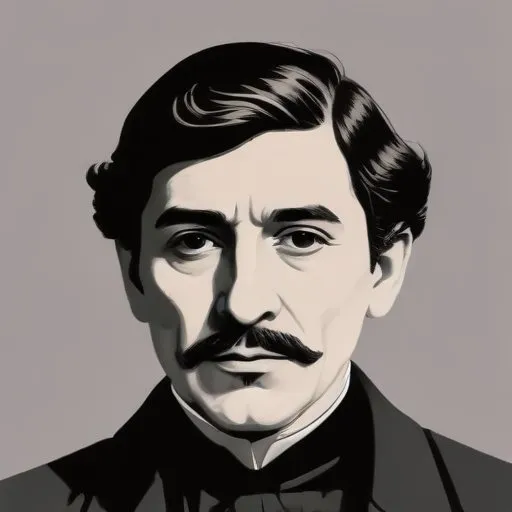
A Spanish composer who wrote over 30 operas, including "Una cosa rara," which premiered in 1786 and became a huge success in Europe. He's known for blending Italian and Spanish musical styles.
Vicente Martín y Soler was a renowned Spanish composer of opera and ballet, known for his melodious Italian comic operas and his work with Lorenzo Da Ponte in the late 18th century. In his time, he was favourably compared to his contemporary, Wolfgang Amadeus Mozart, earning him the nickname "Martini lo spagnuolo" or "Martini the Spaniard."
Martín y Soler was born on May 2, 1754, in Valencia, Spain. His father, Francisco Xavier Martín, was a tenor at the cathedral in town, where Vicente was a chorister in his youth. This early exposure to music laid the foundation for his future career.
He moved to Madrid around 1775 and studied music in Bologna under the tutelage of Giovanni Battista Martini. His first opera, Il tutore burlato, premiered in 1775 at the Teatro Real Coliseo in San Lorenzo de El Escorial, north of Madrid.
Martín y Soler's opera Una cosa rara is perhaps his most famous work, with its melody being quoted in the dining scene of Mozart's Don Giovanni. This opera, along with his others, cemented his reputation as a master of opera buffa, a genre of comic opera.
He worked extensively with librettist Lorenzo Da Ponte, collaborating on several operas, including L'arbore di Diana and
Martín y Soler's music had a significant impact on the development of opera in the late 18th century. His work influenced composers such as Mozart and Domenico Cimarosa, and his operas continued to be performed long after his death.
Today, Martín y Soler is remembered as a pioneering composer of opera buffa, and his music is celebrated for its beauty, wit, and charm.
Little is known about Martín y Soler's personal life, but it is clear that music was his passion and dedication. He spent his life composing and performing, leaving behind a legacy of beautiful music that continues to delight audiences today.
Born in 1749
An 18th-century Italian composer and educator, known for his operas and sacred music, particularly his comic operas that showcased his mastery of melody and harmony.
Born in 1756
A child prodigy and master of classical music, he composed over 600 works, including symphonies, operas, and chamber music, that continue to inspire and influence musicians today.
Born in 1714
A pioneering opera composer who revolutionized the art form with his innovative and expressive works, blending music and drama in a way that captivated audiences.
Born in 1714
A prominent composer of the Neapolitan School, he wrote over 80 operas and was a key figure in the transition between the Baroque and Classical periods. His music was known for its dramatic intensity and expressive melodies.
Born in 1740
An 18th-century Italian composer and educator, known for his operas and contributions to the development of classical music. His works were widely performed and admired by European royalty and aristocracy.
Born in 1728
An 18th-century Italian composer and educator, known for his operas and influence on the development of classical music. He was a prominent figure in the Neapolitan school of opera composition.
Born in 1741
A renowned 18th-century organist and composer, known for his sacred music and operas that showcased his mastery of harmony and counterpoint. His works were widely performed during his lifetime, earning him great acclaim.
Born in 1750
A renowned 18th-century composer and conductor, known for his operas and rivalry with Mozart, as depicted in the movie Amadeus.
