


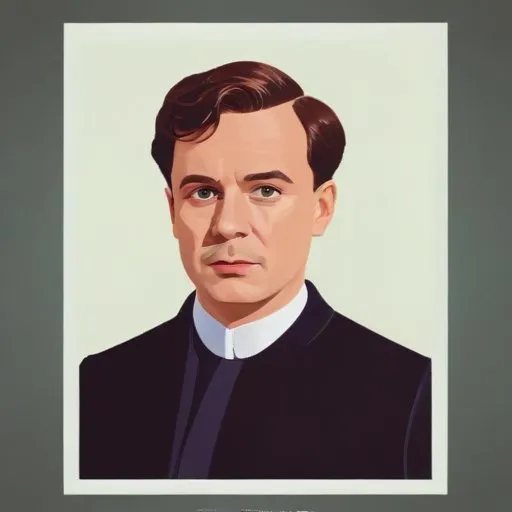
A prominent German jurist who made significant contributions to the development of private law, particularly in the areas of contract and tort law. His work remains influential in shaping modern German and European legal frameworks.
Werner Flume, a renowned German jurist and professor of Roman law, private law, and tax law, left an indelible mark on the development of German private law, earning him the distinction of being called a "lawyer of the century." His groundbreaking contributions to the field have had a lasting impact on modern German jurisprudence, cementing his position as a leading authority in the realm of private law.
Born on September 12, 1908, in Kamen, Germany, Flume's academic journey began at the University of Tübingen, where he initially studied history and ancient languages. However, after attending a lecture by Philipp Heck on the foundations of German private law, he shifted his focus to the faculty of law. Flume later transferred to the University of Bonn, where he completed his law studies under the guidance of Fritz Schulz, a prominent Roman law scholar.
In 1930, Flume passed the First State Examination in Law before the Higher Regional Court of Cologne, and in 1931, he wrote his doctoral thesis, "Studien zur Akzessorietät der römischen Bürgschaftsstipulationen." However, the rise of Nazi Germany and the subsequent removal of Fritz Schulz from Berlin University due to his Jewish heritage under the 1933 Law for the Restoration of the Professional Civil Service disrupted Flume's academic trajectory.
In 1948, Flume published the core of his thesis, "Eigenschaftsirrtum und Kauf," which became a seminal work in the field of private law. This publication marked the beginning of his ascent as a leading authority in German jurisprudence. Flume's subsequent works, including "Allgemeiner Teil des Bürgerlichen Rechts" and "Sachenrecht," solidified his reputation as a master of private law, earning him numerous accolades and honors.
Flume's contributions to German private law have had a profound impact on modern society. His work has shaped the country's legal framework, influencing generations of jurists, lawyers, and scholars. As a testament to his enduring legacy, Flume was awarded the Bundesverdienstkreuz (Federal Cross of Merit) in 1978, recognizing his remarkable service to the field of law.
Flume's work was characterized by a deep understanding of the complexities of private law, coupled with a commitment to the principles of justice and fairness. His philosophical approach to jurisprudence was rooted in a profound respect for the rule of law, and his writings reflect a nuanced appreciation for the intricate balance between individual rights and societal responsibilities.
In addition to his remarkable academic achievements, Flume's personal life was marked by significant milestones, including his marriage to Maria Flume in 1936. The couple had three children, and Flume's family life was marked by a deep sense of commitment and dedication.
In the realm of German private law, Flume's work is often compared to that of his contemporaries, including prominent jurists like Friedrich August von Hayek and Rudolf Smend. While each of these scholars made significant contributions to the field, Flume's work stands out for its breadth, depth, and lasting impact on modern German jurisprudence.
Werner Flume's remarkable legacy continues to shape the landscape of German private law, inspiring generations of scholars and jurists. As a testament to his enduring impact, Flume's work remains a cornerstone of modern German jurisprudence, a fitting tribute to a lawyer of the century.
Born in 1876
Led post-war West Germany's reconstruction and served as a key figure in shaping the country's modern identity, earning him the title "Father of the Federal Republic."
Born in 1884
First President of post-war Germany, credited with rebuilding the country and promoting democracy. He's also known for his strong advocacy for human rights and freedom of the press.
Born in 1904
A German lawyer and politician who served as Chancellor of Germany from 1966 to 1969, known for his role in rebuilding post-war Germany and his efforts to come to terms with the country's Nazi past.
Born in 1913
A German statesman who served as Chancellor of Germany, known for his efforts to reconcile with Eastern Europe and his "Ostpolitik" policy, earning him a Nobel Peace Prize.
Born in 1918
A German leader who served as Chancellor from 1974 to 1982, known for his pragmatic and socially liberal policies, and his key role in shaping the European Union. He was also a respected economist and published author.
96 Years Old
The first unified Germany's leader, who oversaw the country's reunification after the Berlin Wall's fall, and is credited with creating a strong, stable economy.
82 Years Old
The 7th Chancellor of Germany, a lawyer-turned-politician, led the country from 1998 to 2005, implementing significant economic and social reforms. He's known for his efforts to modernize Germany and strengthen the European Union.
72 Years Old
The first female Chancellor of Germany, serving for 16 years, known for her leadership during the European sovereign-debt crisis and her role in shaping the European Union's policy. She's a highly influential figure in modern politics.
