


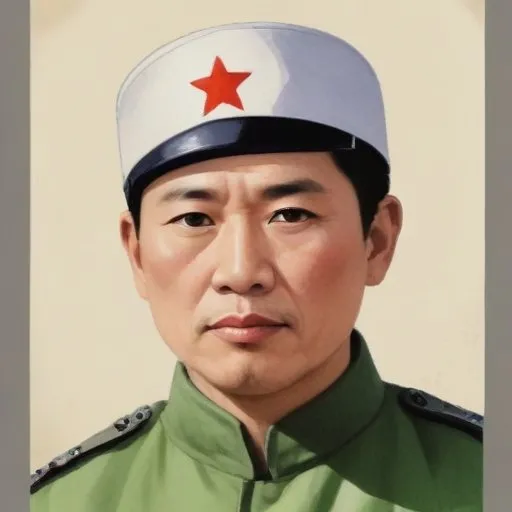
A Chinese rebel leader who led a peasant uprising against the Ming dynasty, known for his brutal tactics and attempts to establish a new dynasty.
Zhang Xianzhong, also known as Chang Hsien-chung, was a Chinese peasant leader who led a peasant rebellion during the Ming-Qing transition, marking a pivotal moment in Chinese history. He is famously remembered as the founder of the Xi dynasty, which although brief, left a lasting impact on the region of Sichuan.
Zhang was born in 1606 in Liushujian, modern-day Dingbian, Shaanxi province, into a poor family. He was described as tall, with a yellow complexion and a tiger-like chin, earning him the nickname "Yellow Tiger."
As the Ming dynasty began to decline, Zhang's mobile forces, known as "roving bandits," conducted raids along the western edge of Shaanxi, plundering swiftly and hiding out in the hills.
He moved into other provinces, raiding towns and cities, and was occasionally defeated by the Ming forces. However, Zhang would often surrender when it was expedient, only to resume his rebellious activities later.
In 1644, Zhang conquered Sichuan, a region in southwestern China, and declared himself king, later proclaiming himself emperor of the Xi dynasty.
Although his rule in Sichuan was brief, Zhang's conquest had a profound impact on the region, which would eventually be depopulated due to the subsequent massacres.
Zhang's legacy is marred by controversy, with the extent of his killings and atrocities debated among historians. While some view him as a brutal tyrant, others see him as a champion of the oppressed peasantry.
Regardless, Zhang Xianzhong's mark on Chinese history is undeniable, serving as a testament to the power of peasant rebellions and the complexities of China's turbulent past.
Zhang's beliefs and philosophical contributions are not well-documented, but it is clear that his actions were driven by a desire for social change and a response to the hardship and oppression faced by the peasantry.
His rebellion can be seen as a cry for justice and equality, reflecting the growing discontent among the lower classes during the late Ming period.
Zhang's life was marked by a series of rebellions, conquests, and defeats, ultimately culminating in his death at the hands of the invading Qing army in 1647.
Despite his tumultuous existence, Zhang Xianzhong's impact on Chinese history has endured, serving as a testament to the power of rebellion and the complexities of human nature.
Born in 1893
Leader of the Chinese Communist Party who implemented radical social and economic reforms, including the Great Leap Forward and the Cultural Revolution, shaping modern China's politics and economy.
Born in 1886
A prominent Chinese military leader and politician who played a crucial role in the Chinese Civil War and the establishment of the People's Republic of China, serving as the second-in-command to Mao Zedong. He's most known for his military strategies and leadership during the war.
Born in 1898
The first Premier of the People's Republic of China, serving from 1949 until his death in 1976, is most known for his key role in the Chinese Communist Party and his diplomatic efforts to improve relations with the West. He played a crucial part in shaping China's foreign policy and economy during a pivotal period in the country's history.
Born in 1898
A prominent military leader who played a crucial role in the Chinese Civil War and later became a key figure in the Communist Party, known for his criticisms of Mao's policies. He was eventually purged and persecuted during the Cultural Revolution.
Born in 1907
A powerful Chinese military leader and politician who rose to prominence during the Chinese Civil War and later became a close ally of Mao Zedong, playing a crucial role in the Cultural Revolution. He is infamous for his alleged plot to overthrow Mao and his mysterious death in a plane crash.
Born in 1896
A prominent Chinese military leader and politician who played a key role in the Chinese Civil War and later served as the 1st Vice Premier of the People's Republic of China, known for his efforts in modernizing the Chinese military. He was a close ally of Mao Zedong and helped establish the People's Liberation Army.
Born in 1892
A renowned Chinese military strategist and statesman who played a crucial role in the Chinese Civil War and the founding of the People's Republic of China. He is celebrated for his brilliant tactics and leadership during the Long March.
73 Years Old
A renowned Chinese violinist and composer, blending Eastern and Western musical styles, creating a unique sound that showcases cultural fusion.
