


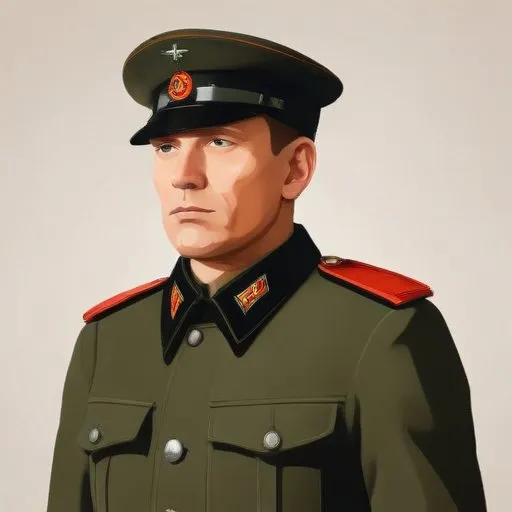
A former SS officer, he was involved in the massacre of 560 civilians in Italy during World War II, and later became a fugitive, evading justice for decades.
Gerhard Sommer is infamously known for his involvement in the brutal massacre of 560 civilians in the Italian village of Sant'Anna di Stazzema on August 12, 1944, during World War II. As a member of the 16th SS Panzergrenadier Division Reichsführer-SS, Sommer's actions earned him a spot on the Simon Wiesenthal Center's list of most wanted Nazi war criminals.
Sommer was born on June 24, 1921, in Hamburg, Germany. At the tender age of 12, he joined the Hitlerjugend (Hitler Youth) in July 1933, where he quickly rose through the ranks to become a Jungzugführer (young platoon leader) in the Deutsches Jungvolk.
In September 1939, Sommer enlisted in the Nazi Party (NSDAP) at just 18 years old. He went on to serve in the Waffen-SS, fighting in the 1st SS Division Leibstandarte SS Adolf Hitler in the Balkans and Ukraine. During his time in the war, Sommer was wounded twice and was awarded the Iron Cross 2nd class.
In 1943, Sommer applied for the rank of SS-Reserveführer and, after training in Proschnitz, was appointed an SS-Untersturmführer on January 30, 1944. He served as a Zugführer (platoon leader) and later a Kompanieführer (company commander) in the 7th Kompanie des II. Bataillons/SS-Panzergrenadier-Regiment 35.
On August 19, 1944, Sommer received the Iron Cross 1st class, just days before his involvement in the Sant'Anna di Stazzema massacre. The atrocities committed during this event would haunt Sommer for the rest of his life.
In 2005, Sommer was convicted by an Italian military court in La Spezia for his role in the Sant'Anna di Stazzema massacre. He was sentenced to life imprisonment and ordered to pay compensation to the victims' families.
Despite his conviction, Sommer was never brought to justice in Germany. In 2002, investigations against him were initiated, but no criminal charges were brought. This lack of accountability sparked outrage among the Italian survivors of the massacre, who continue to seek justice to this day.
Sommer spent his later years in a nursing home in Hamburg, Germany, where he passed away in 2019.
Gerhard Sommer's name will forever be tied to the atrocities committed during World War II. His involvement in the Sant'Anna di Stazzema massacre serves as a stark reminder of the horrors of war and the importance of holding those responsible accountable for their actions.
Born in 1888
A pioneering tank commander who revolutionized modern warfare with his innovative blitzkrieg tactics, earning him the nickname "Father of the Panzerwaffe".
Born in 1887
A highly decorated military strategist who played a crucial role in several key battles during World War II, including the invasion of France and the Siege of Leningrad.
Born in 1880
A German field marshal who led the Wehrmacht during World War II, playing a key role in the invasion of Poland and the Battle of Moscow. He was a prominent figure in the German high command during the war.
Born in 1882
A high-ranking military officer who played a crucial role in World War II, particularly in the Battle of France and the plot to assassinate Adolf Hitler.
Born in 1891
A skilled and highly decorated military leader, known for his tactical genius and defensive strategies during World War II, earning him the respect of both his allies and enemies.
Born in 1882
A high-ranking Nazi officer who served as the Chief of the OKW, the German High Command, during World War II, and was known for his unwavering loyalty to Hitler. He was tried and executed for war crimes after the war.
Born in 1890
Chief of the German High Command during World War II, responsible for planning and executing military operations, and signing the unconditional surrender of Germany.
Born in 1891
A German naval commander who led the U-boat fleet during World War II and briefly served as President of Germany after Hitler's death, known for his role in the war and its aftermath.
