


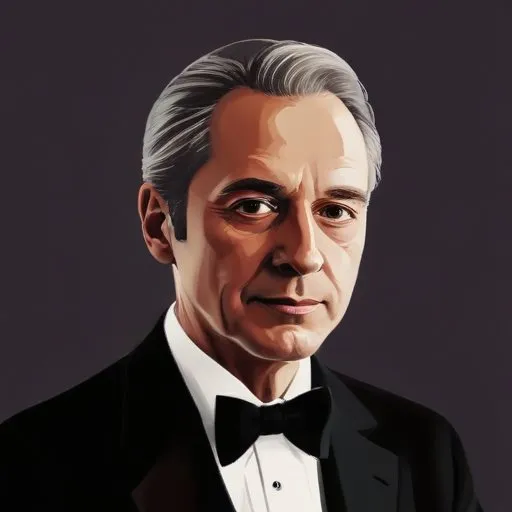
A renowned pianist, conductor, and radio host who brought classical music to the masses through his popular radio program, "Adventures in Good Music." He made classical music accessible and engaging to a wide audience.
Karl Haas was a renowned German-American classical music radio host, celebrated for his rich, sonorous voice, humanistic approach to music appreciation, and popularization of classical music worldwide. As the host of the iconic radio program "Adventures in Good Music," Haas brought classical music to the masses, making it accessible and enjoyable for audiences of all backgrounds.
Haas was born on December 6, 1913, in Speyer, Palatinate, Germany. He studied at the Mannheim Conservatory and earned a doctorate in music literature from Heidelberg University. Under the guidance of the revered pianist Artur Schnabel, Haas honed his piano skills, laying the foundation for his future as a respected musicologist, pianist, and conductor.
In 1936, Haas fled Nazi Germany, seeking refuge in the United States. The Jewish émigré initially settled in Detroit, Michigan, before moving to other parts of the country. He eventually returned to Detroit, where he lived near the end of his life. Haas married Trudie, and the couple had two sons and a daughter together. Trudie passed away in 1977.
Haas launched his radio program, "Adventures in Good Music," on WJR in Detroit in 1959. The show's popularity soon led to syndication across the United States in 1970, airing on WCLV in Cleveland, Ohio. Eventually, "Adventures in Good Music" reached commercial and public radio stations worldwide, becoming the most widely heard classical music radio program globally.
The show's theme music, the second movement from Beethoven's "Pathetique" Sonata, was performed live by Haas at the start of each program. His warm, inviting greeting, "Hello everyone," became synonymous with the show.
In 1996, Haas received an honorary degree in Doctor of Letters from Oglethorpe University, recognizing his contributions to the world of classical music.
Karl Haas's impact on classical music radio is immeasurable. Through "Adventures in Good Music," he demystified classical music, making it accessible to a broad audience. His humanistic approach and passion for music inspired countless listeners, fostering a deeper appreciation for the art form.
Haas's legacy extends beyond his radio program. As a respected musicologist, pianist, and conductor, he left an indelible mark on the world of classical music. His book, "Inside Music," remains a testament to his expertise and dedication to sharing the beauty of classical music with the world.
Born in 1910
A renowned pianist and conductor, known for his interpretations of Richard Wagner's operas and his leadership of the Royal Opera House in London. He was particularly celebrated for his performances of German Romantic repertoire.
Born in 1888
A renowned German conductor, celebrated for his interpretations of Richard Wagner's operas, particularly his iconic performances of "Der Ring des Nibelungen" at the Bayreuth Festival.
Born in 1902
A renowned German conductor, he led prestigious orchestras, including the Berlin Philharmonic, and was particularly acclaimed for his interpretations of Bruckner, Wagner, and Strauss.
Born in 1888
A renowned maestro who led the Chicago Symphony Orchestra to new heights, earning a reputation for his precise and powerful interpretations of classical music.
Born in 1897
A renowned conductor and composer, known for his precise and expressive performances, leading the Cleveland Orchestra to international acclaim. His interpretations of classical music remain highly influential.
Born in 1912
A renowned conductor who led prestigious orchestras, including the New York Philharmonic and Boston Symphony Orchestra, and was known for his precise and nuanced interpretations of classical music.
Born in 1891
A renowned violinist and conductor, leading the Boston Symphony Orchestra to new heights, and premiering works by famous composers like Debussy and Ravel.
Born in 1918
A renowned musician who blended jazz, classical, and Broadway styles, creating iconic works like West Side Story, and inspiring generations with his charismatic performances and innovative compositions.
