


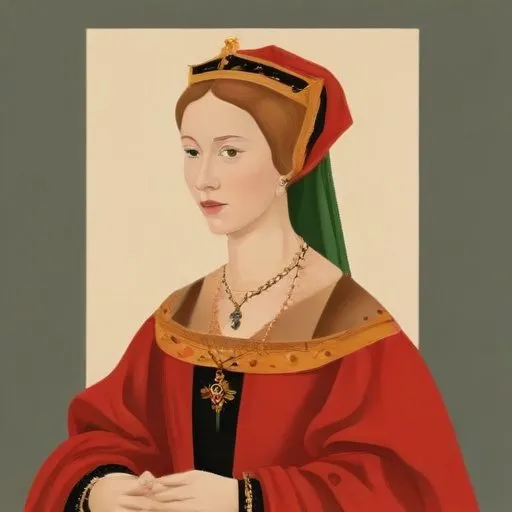
A French noblewoman who married into the royal family and was a patron of the arts, known for her cultural and literary contributions.
Marie of Cleves, Duchess of Orléans, was a renowned patron of letters and a skilled poet, whose love for literature and the arts shaped the cultural landscape of 15th-century France. As the third wife of Charles, Duke of Orléans, she played a significant role in promoting the works of writers and artists, earning her a lasting legacy as a champion of the arts.
Born on September 19, 1426, as the last child of Adolph I, Duke of Cleves, and Mary of Burgundy, Marie was destined for greatness. Her marriage to Charles, Duke of Orléans, at the age of 14, marked the beginning of her journey as a patron of letters. The 32-year age gap between the couple did not deter Marie from becoming an active participant in the Duke's literary circle, where she commissioned numerous works and encouraged the development of poetry and music.
Marie's own poetic talent flourished during this period, as she composed ballads and verses that reflected her love for nature, love, and the human experience. Her patronage extended to prominent writers and artists of the time, including the likes of François Villon, who benefited from her support and encouragement. Her commissioned works not only showcased her refined taste but also helped to promote the cultural renaissance of the 15th century.
After the Duke's death, Marie's life took a dramatic turn. She secretly remarried in 1480 to one of her gentlemen of the chamber, the Artesian Sieur de Rabodanges, who was significantly younger than her. This union, although seen as scandalous by some, did not tarnish her reputation as a patron of the arts. Instead, it demonstrated her defiance of convention and her unwavering commitment to following her heart.
Marie of Cleves, Duchess of Orléans, left an indelible mark on the cultural landscape of France. Her patronage of letters and the arts paved the way for future generations of writers and artists, while her own poetic talent inspired countless others to pursue their creative passions. Today, she is remembered as a true champion of the arts, whose love for literature and poetry continues to inspire and delight.
Marie's life and legacy have been immortalized in literature, most notably in Hella Haasse's historical novel, In a Dark Wood Wandering, which explores the tumultuous life of Charles, Duke of Orléans, and his relationships, including his marriage to Marie.
Through her remarkable life, Marie of Cleves, Duchess of Orléans, demonstrated that a love for letters and the arts could transcend convention and defy expectation, leaving behind a lasting legacy that continues to inspire and captivate generations to come.
Born in 1519
King of France from 1547 to 1559, known for his cultural and artistic patronage, and his role in the Italian Wars.
Born in 1519
The Italian-French queen who married into the French monarchy and wielded significant power behind the scenes, known for her cunning politics and lavish court festivities. She sponsored the arts and architecture, leaving a lasting legacy on French culture.
Born in 1528
The Queen of Navarre was a powerful leader who ruled with a strong sense of justice and promoted the Protestant Reformation in France, playing a key role in the country's religious wars. She was a patron of the arts and a strong advocate for women's rights.
Born in 1545
Daughter of King Henry II of France, she was a queen of Spain through her marriage to Philip II, playing a crucial role in 16th-century European politics and diplomacy.
Born in 1553
The Queen of France who brokered peace between Catholics and Protestants through her marriage, but her lavish lifestyle and scandals sparked the St. Bartholomew's Day massacre.
