


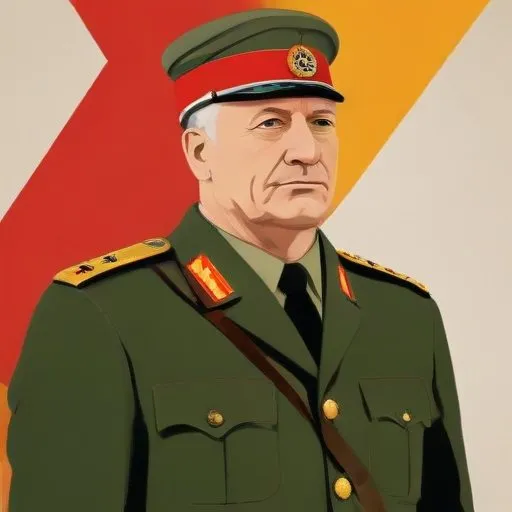
A German politician who served as President of West Germany from 1974 to 1979, known for his efforts to improve relations with East Germany and his role in shaping the country's foreign policy.
Walter Scheel, a German statesman, is best known for his roles as the President of Germany from 1974 to 1979 and the Federal Minister of Economic Cooperation and Development from 1961 to 1966. Throughout his long and distinguished career, Scheel played a significant role in shaping Germany's political landscape, earning him a reputation as a respected leader and statesman.
Scheel was born on July 8, 1919, in Solingen, North Rhine-Westphalia, Germany. He completed his Abitur at the Reformrealgymnasium Schwertstrae and later became a member of the Nazi Party in 1942. During World War II, Scheel served in the Luftwaffe as a radar operator on a Bf 110 night fighter.
In 1946, Scheel joined the Free Democratic Party of Germany (FDP) and began his journey in politics. He first served in government as the Federal Minister of Economic Cooperation and Development from 1961 to 1966. Later, during the chancellorship of Willy Brandt, Scheel held the positions of Federal Minister of Foreign Affairs and Vice Chancellor.
In 1968, Scheel took over as the party president of the FDP, marking a significant shift towards the left. This move paved the way for the Free Democrats to form a coalition with the Social Democratic Party (SPD) in 1969. Scheel played a crucial role in this alliance, which saw the election of Gustav Heinemann as the President of the Republic.
On May 7, 1974, Scheel became the Acting Chancellor of West Germany following Willy Brandt's resignation due to the Guillaume Affair. Shortly after, on July 15, 1974, Scheel was elected as the President of West Germany, a position he held until 1979.
Walter Scheel's presidency was marked by his commitment to social liberalism and foreign policy. He played a key role in shaping Germany's relations with its European neighbors and was a strong advocate for European integration. Scheel's legacy continues to be felt in modern German politics, where he is remembered as a statesman who worked tirelessly to promote social justice and democracy.
Scheel was a member of the Protestant Church in Germany and remained committed to his faith throughout his life. He passed away on August 24, 2016, leaving behind a legacy of public service and dedication to his country.
Throughout his career, Scheel was known for his inspiring words and leadership. One of his most famous quotes is:
"Democracy is not a spectator sport. It requires active participation and engagement from all citizens."
These words reflect Scheel's commitment to democratic values and his passion for encouraging active citizenship.
Walter Scheel's life and career spanned some of the most significant events of the 20th century, including World War II and the Cold War. His experiences and leadership played a crucial role in shaping Germany's response to these global events and his legacy continues to be felt in modern German politics.
Born in 1918
A German leader who served as Chancellor from 1974 to 1982, known for his pragmatic and socially liberal policies, and his key role in shaping the European Union. He was also a respected economist and published author.
Born in 1913
A German statesman who served as Chancellor of Germany, known for his efforts to reconcile with Eastern Europe and his "Ostpolitik" policy, earning him a Nobel Peace Prize.
82 Years Old
The 7th Chancellor of Germany, a lawyer-turned-politician, led the country from 1998 to 2005, implementing significant economic and social reforms. He's known for his efforts to modernize Germany and strengthen the European Union.
71 Years Old
The first female Chancellor of Germany, serving for 16 years, known for her leadership during the European sovereign-debt crisis and her role in shaping the European Union's policy. She's a highly influential figure in modern politics.
Born in 1904
A German lawyer and politician who served as Chancellor of Germany from 1966 to 1969, known for his role in rebuilding post-war Germany and his efforts to come to terms with the country's Nazi past.
Born in 1897
The second Chancellor of West Germany, a key figure in the country's post-war economic miracle, known for his liberal economic policies and leadership during a period of rapid growth and reconstruction.
Born in 1876
Led post-war West Germany's reconstruction and served as a key figure in shaping the country's modern identity, earning him the title "Father of the Federal Republic."
Born in 1884
First President of post-war Germany, credited with rebuilding the country and promoting democracy. He's also known for his strong advocacy for human rights and freedom of the press.
