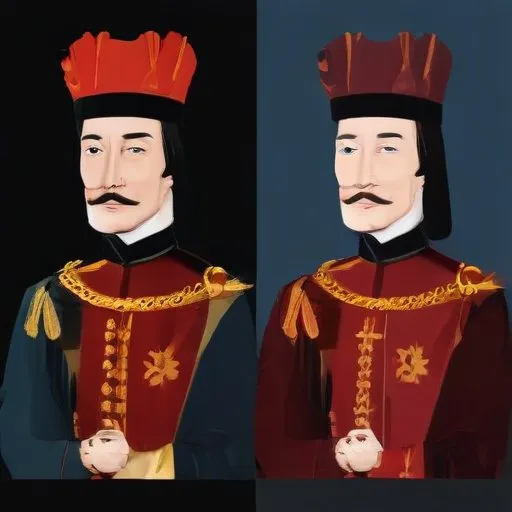
Charles IV, Duke of Lorraine: A Life of Power, Intrigue, and Conquest
Renowned for his Valorous Leadership and Strategic Military Campaigns
Charles IV, Duke of Lorraine, is revered for his unwavering dedication to his duchy and his unrelenting pursuit of power in 17th-century Europe. As the ruler of Lorraine from 1624 until his death in 1675, Charles IV left an indelible mark on European history, marked by his cunning diplomatic prowess, fearless military strategies, and unyielding determination to safeguard his territory.
A Royal Upbringing and Early Reign
Born on April 5, 1604, Charles IV was the son of
Francis II, Duke of Lorraine, and Christina of Salm. As the eldest son, he was groomed from a young age to assume the throne, inheriting the duchy at the tender age of 20. During his early reign, Charles IV navigated the complex web of European alliances, forging relationships with powerful nations and dynasties, including the Holy Roman Empire and the Habsburg family.
A Web of Intrigue and Betrayal
However, Charles IV's anti-French policies soon drew the ire of
Cardinal Richelieu, the de facto ruler of France. Richelieu's policies were inherently anti-Habsburg, aimed at increasing French power and prestige at the expense of the two dynasties. Charles IV's support for Gaston d'Orléans, the rebellious brother of King Louis XIII, further antagonized the French government. In 1633, French troops invaded Lorraine, prompting Charles IV to abdicate in favor of his younger brother, Nicholas Francis, under intense French pressure.
Military Conquests and Imperial Ambitions
Undeterred, Charles IV entered the imperial service and fought alongside the Holy Roman Empire in the Thirty Years War. His military prowess was evident in his victory at the Battle of Nördlingen, where he led troops to triumph against the Swedish army. This resounding victory cemented his reputation as a skilled military commander, earning him the respect and admiration of his contemporaries.
Legacy and Historical Context
Charles IV's tumultuous reign was marked by his steadfast commitment to preserving Lorraine's autonomy and resisting French dominance. His legacy serves as a testament to the complexities of 17th-century European politics, where alliances were forged and broken with alarming frequency. Despite the challenges he faced, Charles IV left an enduring impact on the history of Lorraine, his bold leadership inspiring future generations of rulers.
Comparative Analysis with Contemporaries
In comparison to his contemporaries, Charles IV's military campaigns and diplomatic maneuverings rival those of the great European leaders of the time, including King
Louis XIII of France and Emperor
Ferdinand II of Austria. His strategic prowess and unwavering dedication to his duchy earn him a place among the most notable leaders of the 17th century.
Personal Milestones and Key Life Events
- Born on April 5, 1604, in Lorraine, France
- Inherited the duchy at the age of 20
- Supported Gaston d'Orléans against Cardinal Richelieu
- Absconded to the imperial service after abdicating in 1634
- Victory at the Battle of Nördlingen in 1634
- Died on September 18, 1675, in Allenbach, Lorraine
By examining the life and reign of Charles IV, Duke of Lorraine, we gain insight into the intricate world of 17th-century European politics, where power, intrigue, and conquest shaped the course of history.
FAQ
What were Charles IVs roles and responsibilities as Duke of Lorraine?
As Duke of Lorraine, Charles IV was the ruler of the duchy, responsible for governing and defending its territories, as well as promoting its economic and cultural development.
What was Charles IVs relationship with the Holy Roman Empire?
Charles IV was a loyal vassal of the Holy Roman Empire, serving as a military leader and diplomat on behalf of the Empire.
What were some of Charles IVs notable achievements as Duke?
Charles IV was a skilled military leader who defended his territories against several threats, including the Ottoman Empire. He also played a key role in promoting trade and commerce in his region.
How did Charles IVs rule impact the development of Lorraine?
Charles IVs rule had a significant impact on the development of Lorraine, as he promoted economic growth, defended the region against external threats, and strengthened its infrastructure.
What is Charles IVs legacy as Duke of Lorraine?
Charles IVs legacy as Duke of Lorraine is one of strength, wisdom, and loyalty. He is remembered as a dedicated leader who served his people and protected his territories.