


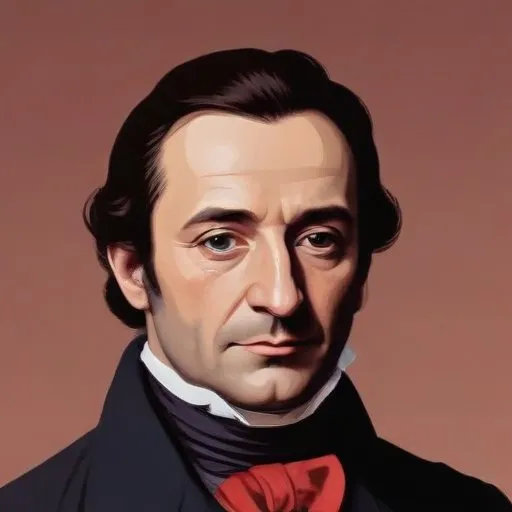
A French composer and academic who wrote operas and sacred music, known for his contributions to the development of French opera and his influence on later composers.
PierreAlexandre Monsigny, a French composer, is renowned for laying the foundation of the opéra comique, a genre that paved the way for a new era of French composers, including Franois-Adrien Boieldieu, Daniel-Franois-Esprit Auber, Charles Gounod, Georges Bizet, and Jules Massenet. Born on October 17, 1729, in Fauquembergues, near Saint-Omer, Monsigny's contributions to music have left an indelible mark on the world of opera.
Monsigny was born four months before his parents' marriage, to Marie-Antoinette Dufresne and Nicolas Monsigny. He was educated at the Walloon Collège des Jésuites in Saint-Omer, where he discovered his passion for music. After his father's death in 1749, Monsigny left for Paris with a violin, a recommendation letter, and a few coins in his pocket, determined to pursue a musical career and provide for his siblings.
In 1752, Monsigny was inspired by a performance of Giovanni Battista Pergolesi's La serva padrona at the Paris Opera, and he decided to dedicate himself to composing opera. He became a student of Pietro Gianotti and a contrabassist at the Paris Opéra. Secretly, he wrote his first comic opera, Les aveux indiscrets, with a text by La Ribardière, which premiered at the theater of the Foire St-Germain in February 1759.
This work was well-received, encouraging Monsigny to compose a second opera, Le maître en droit, in collaboration with Pierre-René Lemonnier. The opera's success led to a collaboration with Michel-Jean Sedaine, a well-liked librettist, and paved the way for Monsigny's future compositions.
Monsigny's opéra comique, a genre characterized by spoken dialogue and comic elements, revolutionized the French opera scene. His works, such as Félix (1769) and Le roi et le fermier (1762), showcased his mastery of the genre and earned him recognition as one of the founders of opéra comique.
His compositions not only entertained audiences but also played a significant role in shaping the development of French opera. Monsigny's works inspired a new generation of composers, who built upon his legacy and further expanded the boundaries of the opéra comique.
In 1813, Monsigny was elected a member of the French Académie des Beaux-Arts, a testament to his contributions to the world of music. Today, he is remembered as a pioneering figure in the development of opéra comique, and his works continue to be celebrated for their wit, charm, and musical innovation.
Monsigny's legacy extends far beyond his own compositions, as he paved the way for a new era of French opera and inspired generations of composers to come.
Born in 1714
A pioneering opera composer who revolutionized the art form with his innovative and expressive works, blending music and drama in a way that captivated audiences.
Born in 1683
A prominent figure in the Baroque period, this composer and theorist revolutionized Western classical music with innovative harmonies and treatises on music theory, shaping the course of classical music.
Born in 1729
A French composer and academic who wrote operas and sacred music, known for his contributions to the development of French opera and his influence on later composers.
Born in 1726
A renowned 18th-century chess master and opera composer, celebrated for his exceptional skill in both fields, particularly his chess strategies and musical works that showcased his innovative style.
Born in 1728
An 18th-century Italian composer and educator, known for his operas and influence on the development of classical music. He was a prominent figure in the Neapolitan school of opera composition.
Born in 1750
A renowned 18th-century composer and conductor, known for his operas and rivalry with Mozart, as depicted in the movie Amadeus.
Born in 1749
An 18th-century Italian composer and educator, known for his operas and sacred music, particularly his comic operas that showcased his mastery of melody and harmony.
