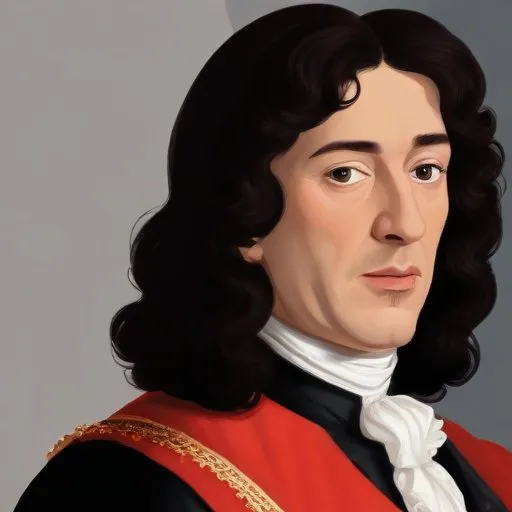
Charles II, Archduke of Austria: The Unyielding Champion of Catholicism and Patron of the Arts
A Champion of Catholicism in a Turbulent Era
Charles II, Archduke of Austria, is remembered as a fervent defender of Catholicism, who championed the Counter-Reformation and invited the Jesuits to his territory. As a member of the House of Habsburg, he ruled Inner Austria, Styria, Carniola, Carinthia, and Gorizia from 1564, leaving an indelible mark on the region's history.
A Family Legacy of Power and Influence
Born on June 3, 1540, in Vienna, Charles was the third son of
Ferdinand I, Holy Roman Emperor, and
Anne of Bohemia and Hungary. His family ties to the powerful House of Habsburg ensured his position as a significant figure in European politics.
A Suitor of Queens and a Champion of the Faith
In 1559, Charles was proposed as a suitor for
Elizabeth I of England, with negotiations dragging on for years. However, Elizabeth ultimately declined, citing Charles' Catholicism as the reason. Undeterred, Charles later set his sights on
Mary, Queen of Scots, but was rebuffed once again. These failed attempts did not deter Charles from his unwavering commitment to the Catholic faith.
A Patron of the Arts and Sciences
Charles II was a passionate patron of the arts and sciences, recognizing the importance of fostering cultural and intellectual growth in his territories. He supported the renowned composer Orlando di Lasso and the music theorist
Lodovico Zacconi, who flourished under his patronage. In 1573, Charles founded the Akademisches Gymnasium in Graz, the oldest secondary school in Styria, solidifying his legacy as a champion of education.
A Strategic Leader in the Face of Ottoman Empire
As the Inner Austrian line bore the brunt of the wars against the Ottoman Empire, Charles took decisive action to protect his territories. In 1579, he founded the fortress of Karlovac in Croatia, naming it after himself. This strategic move effectively safeguarded his lands from Ottoman invasions.
A Legacy of Religious Tolerance and Scientific Discovery
Despite his unwavering commitment to Catholicism, Charles II demonstrated a surprising degree of tolerance towards Protestantism. In 1572, he made significant concessions to the Inner Austrian Estates in the Religious Pacifications of Graz and the 1578 Libellum of Bruck. This tolerance paved the way for scientific discovery, as Charles' territories became a hub for intellectual curiosity and exploration.
Key Life Events and Milestones
- 1540: Born on June 3 in Vienna
- 1559: Proposed as a suitor for Elizabeth I of England
- 1563: Suitor for Mary, Queen of Scots
- 1564: Became Archduke of Austria and ruler of Inner Austria, Styria, Carniola, Carinthia, and Gorizia
- 1572: Made concessions to the Inner Austrian Estates in the Religious Pacifications of Graz
- 1573: Founded the Akademisches Gymnasium in Graz
- 1578: Issued the Libellum of Bruck
- 1579: Founded the fortress of Karlovac in Croatia
- 1590: Died on July 10
A Lasting Impact on History
Charles II, Archduke of Austria, left an enduring mark on European history, championing the Catholic faith, fostering artistic and scientific growth, and safeguarding his territories against the Ottoman Empire. His legacy continues to inspire generations, serving as a testament to the power of conviction and strategic leadership.
FAQ
What was Charles II, Archduke of Austrias, role in the Habsburg dynasty?
Charles II, Archduke of Austria, was a key figure in the Habsburg dynasty, playing a crucial role in the dynastys politics, diplomacy, and military campaigns.
How did Charles II, Archduke of Austria, impact the history of Austria?
Charles II, Archduke of Austria, had a profound impact on the history of Austria, shaping the countrys political, cultural, and economic landscape.
What were Charles II, Archduke of Austrias, greatest achievements?
Charles II, Archduke of Austrias, greatest achievements include his role in strengthening the Habsburg dynasty and his contributions to the cultural and economic development of Austria.
How did Charles II, Archduke of Austria, maintain power in a tumultuous region?
Charles II, Archduke of Austria, maintained power through strategic alliances, military campaigns, and clever diplomacy, ensuring the survival of the Habsburg dynasty.
What is Charles II, Archduke of Austrias, legacy in modern times?
Charles II, Archduke of Austrias, legacy can be seen in the modern-day regions of Austria, where his historical significance continues to be celebrated and studied.