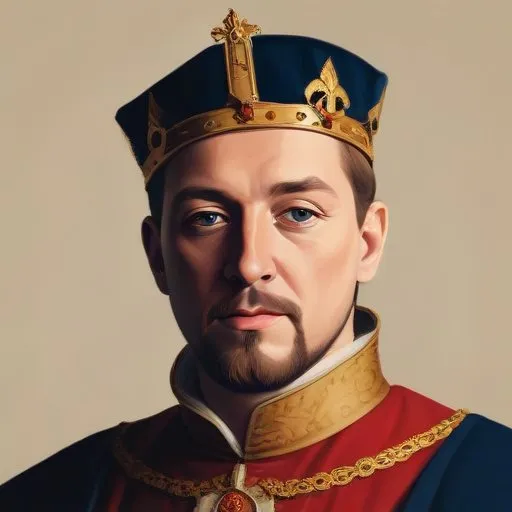
Henry II, Duke of Lorraine: The Good and the Powerful
A Life of Legacy and Nobility
Henry II, Duke of Lorraine, known as "the Good" (le Bon), is remembered as a significant figure in European history, leaving an indelible mark on the continent's nobility and politics. As the Duke of Lorraine from 1608 until his death in 1624, Henry's life was a testament to his strong character, strategic alliances, and dedication to his people.
Early Life and Family Ties
Born on November 8, 1563, Henry was the son of
Charles III, Duke of Lorraine, and
Claude of Valois, daughter of
Henry II of France and Catherine de Medici. This lineage made him a brother-in-law of
Henry IV of France, solidifying his position within the complex web of European royal families.
Marriages and Alliances
Henry's first marriage to Catherine of Bourbon, Duchess of Albret, in 1599, was a strategic move to secure relations with the House of Bourbon, a powerful rival to the House of Lorraine. Although the union was childless, it marked an important step in establishing Henry's reputation as a savvy politician. After Catherine's death in 1604, Henry married Margherita Gonzaga, daughter of Vincenzo Gonzaga, Duke of Mantua, in 1606. This second marriage produced four daughters, two of whom survived to adulthood and played key roles in shaping the future of Lorraine.
Legacy and Succession
Upon Henry's death in 1624, his younger brother, Francis II, succeeded him as Duke of Lorraine. Henry's daughters, Nicole and Claude, went on to marry prominent nobles, further solidifying the House of Lorraine's influence across Europe.
Influence on Modern Society
Henry's reign marked a significant shift in Lorraine's politics, as he navigated the complex landscape of 17th-century Europe. His diplomatic efforts and strategic alliances helped maintain peace and stability in the region, earning him the reputation as a wise and effective leader.
Personal Milestones and Key Life Events
- 1563: Born on November 8th, in Bar-le-Duc, Lorraine
- 1599: Married Catherine of Bourbon, Duchess of Albret
- 1604: Catherine's death
- 1606: Married Margherita Gonzaga
- 1608: Became Duke of Lorraine
- 1624: Died on July 31st, at the age of 60
Historical Context and Legacy
Henry II's life and reign are a testament to the complexities of 17th-century European politics. His diplomatic efforts, strategic alliances, and strong leadership set a precedent for future generations of Lorraine's rulers. As a key figure in European history, Henry's legacy continues to inspire and fascinate scholars and historians alike.
Trivia and Fun Facts
- Henry's baptism in Bar-le-Duc was attended by his aunt, Margaret of Valois, who was only ten years old at the time.
- Henry's second marriage to Margherita Gonzaga required a papal dispensation, which was initially refused by Pope Clement VIII.
By examining Henry II's life and reign, we gain insight into the intricate world of 17th-century European politics and the importance of strategic alliances, strong leadership, and diplomacy in shaping the course of history.
FAQ
What was the significance of Henry II, Duke of Lorraine, in French history?
Henry II, Duke of Lorraine, played a crucial role in French history, serving as a military leader and statesman during the French Wars of Religion. He was a key advisor to King Henry IV of France.
How did Henry II, Duke of Lorraine, impact the French monarchy?
Henry II, Duke of Lorraine, helped to strengthen the French monarchy by supporting King Henry IVs efforts to consolidate power and establish a stable government.
What role did Henry II, Duke of Lorraine, play in the Thirty Years War?
Henry II, Duke of Lorraine, was a key military leader during the Thirty Years War, fighting on behalf of the Holy Roman Empire against the French and Swedish armies.
What were Henry II, Duke of Lorraines, contributions to the arts and culture?
Henry II, Duke of Lorraine, was a patron of the arts and culture, supporting prominent artists and writers of his time. He also founded several institutions, including the University of Pont-à-Mousson.
How did Henry II, Duke of Lorraines, legacy shape European politics?
Henry II, Duke of Lorraines, legacy had a lasting impact on European politics, as he helped to establish a balance of power between the Holy Roman Empire and the French monarchy, influencing the course of European history for centuries to come.